From Photograph to Painting: Intentional Changes That Shape the Final Artwork

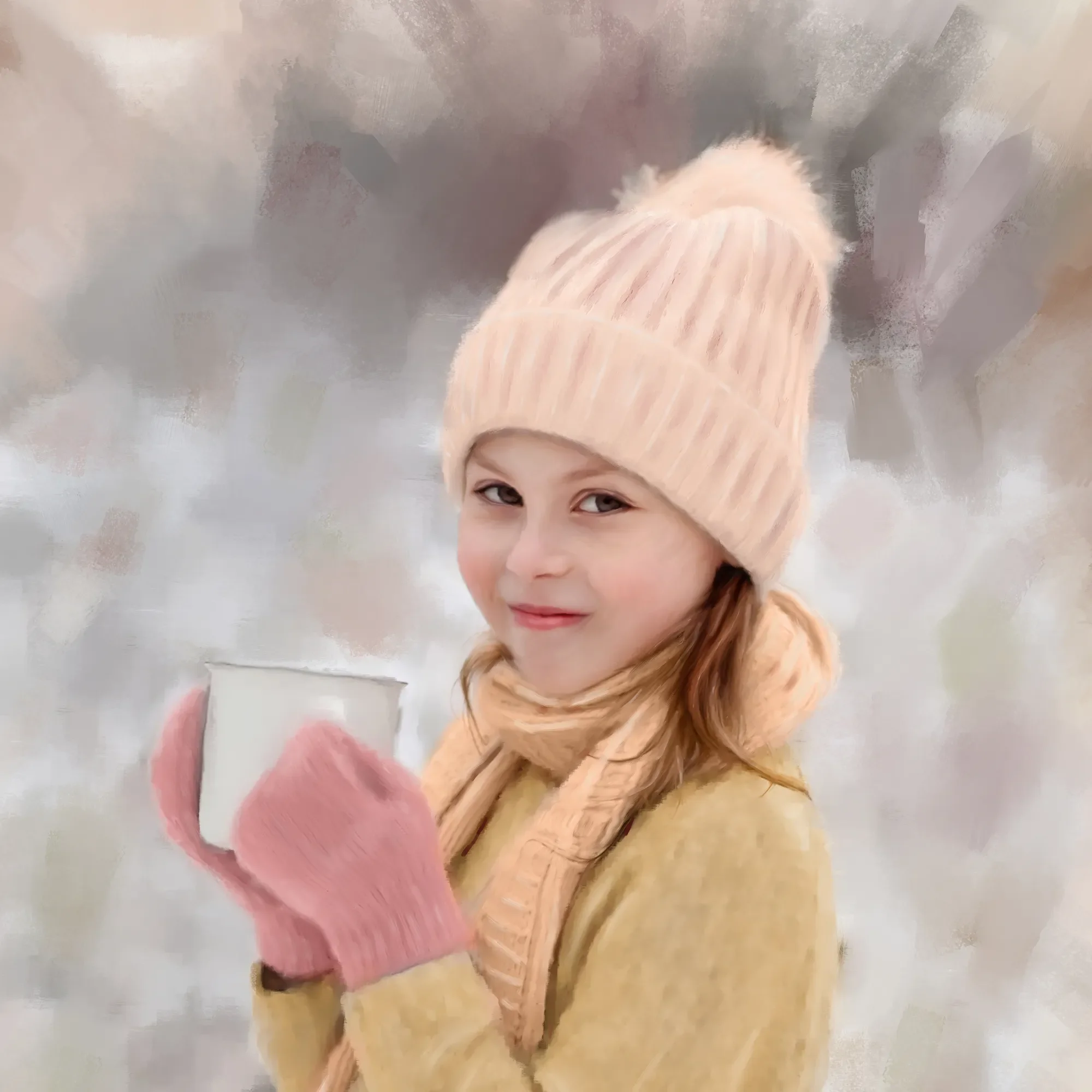
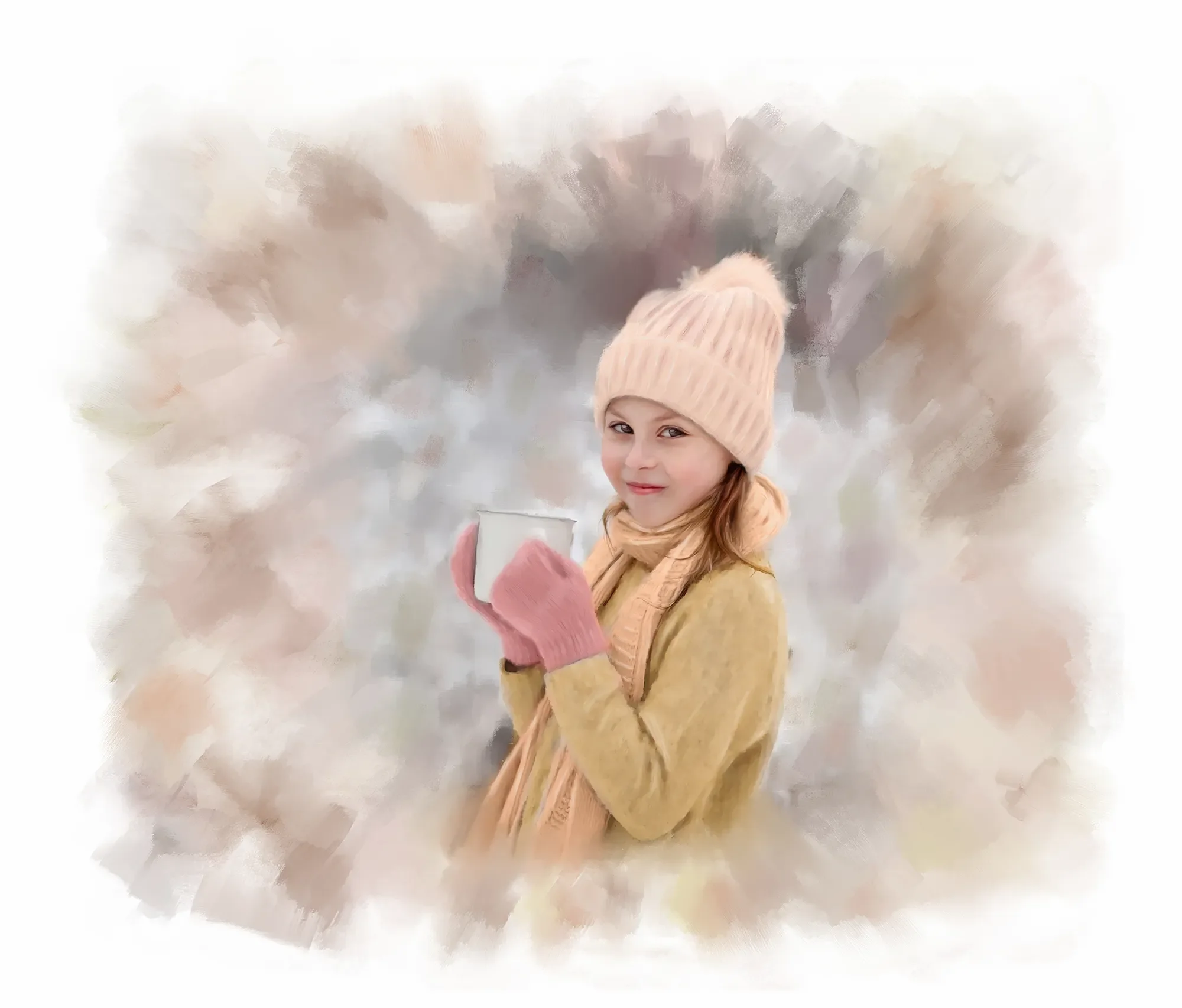
One of the biggest questions I get is, “Can my photo become a digital painting?” The answer is almost always, “yes”. One of my jobs as a digital portrait artist is to help you bring out the best part of your photo, and eliminate or downplay the not so great parts. This is done in many ways. But here are a few that I use when turning your photo into a digital painting.
A photograph records everything. A painting selects.
The difference between the source image and the final painted piece is not just stylistic; it is structural. The goal is to control attention, simplify complexity, and reinterpret color so the image reads as a cohesive visual statement rather than a literal capture.
Cell Photo To Painting: Background Simplification and Control
In the original photograph, the snowy environment contains:
branches
texture variations
tonal shifts across the entire frame
All of these compete for attention.
In the painting:
the background is abstracted into soft, diffused brushwork
detail is intentionally removed
edges are softened or eliminated
This creates:
separation between subject and environment
a controlled visual hierarchy
a reduction in noise
The background becomes supportive rather than descriptive.
What Photos Work Best For Digital Paintings? Subject Isolation Through Edge Management
The photograph contains natural edge transitions:
hat to background
hair to snow
clothing to environment
In the painting:
edges are selectively sharpened around the face
edges are softened or lost elsewhere
This directs attention to:
eyes
facial expression
The result:
the viewer reads the face first, not the scene
Iphone Photo To Painting: Color Reinterpretation (Not Correction)
The original image is dominated by:
cool neutrals (snow, gray tones)
muted winter palette
In the painting:
colors are shifted toward a controlled warm palette
peach
soft ochre
muted rose
background colors are harmonized rather than literal
This creates:
emotional cohesion
warmth against a cold setting
a unified color story
Color is used as a design tool, not a record of reality.
Reduction of Micro-Detail
The photograph contains:
fabric texture
fine environmental detail
subtle tonal variation across all surfaces
In the painting:
detail is reduced globally
detail is preserved selectively in:
eyes
facial features
This creates:
clarity of focus
readability at a distance
a painterly interpretation rather than photographic replication
Composition Refinement
The original composition includes:
more environmental context
broader spatial depth
In the painting:
the composition is tightened
the subject is more centrally anchored
surrounding space is used as a visual buffer
This reinforces:
subject importance
simplicity
intentional framing
Tonal Compression
Photographs often contain a wide range of tonal information.
In the painting:
midtones are compressed
extremes are softened
contrast is controlled around the face
This results in:
smoother visual transitions
less distraction
emphasis on expression over environment
Gesture and Expression Preservation
Despite structural changes, key elements are preserved:
slight smile
eye direction
relaxed posture
These define the identity of the subject.
The painting does not alter expression; it removes distractions around it.
Creating a “Thought Piece” Instead of a Literal Scene
The final image is not a winter scene with a child holding a cup.
It becomes:
a study in warmth within cold
a controlled palette built around softness
a simplified composition focused on presence
The abstract background supports interpretation rather than describing location.
What Is Added That Was Not There
The painting introduces:
intentional brushwork
atmospheric diffusion
color relationships that do not exist in the original scene
These additions:
unify the image
create mood
shift the piece from documentation to interpretation
What Happens When Turning A Photo Into A Digital Painting?
The transformation from photo to painting involves:
removing detail to create focus
reshaping color for cohesion
controlling edges to guide the eye
simplifying composition
preserving expression while eliminating distraction
The result is not a copy of the photograph. It is a refined visual statement built from it. When you work with me as your digital artist, these are some of the many things I will do to make a legacy art piece from your photograph. Contact me today to get your digital painting started or get a free evaluation of your photo